
From a Rejected ThemeForest Template to 70k a Month
How Flowbite grew an open-source component library into a bootstrapped, two-person business
Key Lessons
- •A rejection is a data point, not a verdict: keep shipping
- •Give the core away as open source and sell the extras once
- •Let one big sales spike tell you where the market really is
- •Premium pricing and zero discounts attract better customers
- •Own the design layer that AI coding tools still leave missing
My co-founder Robert and I did not start with a product. We started with outsourcing: building software for other people, on other people’s timelines, for other people’s margins. Bergside was supposed to be our way out of that, and the first attempt did not go well.
The rejection that did not stop us
We decided to sell templates instead of hours. We built one, submitted it to ThemeForest, and it got rejected. That is the part of the story most people would quietly delete. We kept going. We submitted more, kept improving the work, and paid attention to what the market reacted to.
Bergside’s first ThemeForest template was rejected, and the company that grew out of it now does 70k a month. The rejection was information about one submission, not a judgment on the whole idea. Most founders treat an early no as proof the plan is wrong and quit one iteration before the thing that works. Zoltan and his co-founder treated it as feedback, shipped the next version, and kept shipping. Separate the verdict on a single attempt from the verdict on the direction, and keep going.
The Black Friday that pointed at the market
The turning point was a single night. We had built a Tailwind and Figma design system kit, and on one Black Friday it sold 3,000 euros in a few hours. That spike was the clearest signal we ever got. The market was not “templates,” it was Tailwind components, and people were ready to pay for them right then.
We doubled down on exactly that. We built more Tailwind components, designed them in Figma, started building in public, and that work became Flowbite.
Bergside sold one Tailwind and Figma kit for 3,000 euros in a single Black Friday night, and that one spike redirected the entire company toward Tailwind components. A sudden, sharp sales response is the market telling you where the demand actually lives, in a way no survey or roadmap meeting ever will. When something you ship spikes far beyond the rest, do not treat it as a lucky one-off. Treat it as a map. Drop what is flat and pour your effort into the thing the market just voted for with its wallet.
Open source as the whole funnel
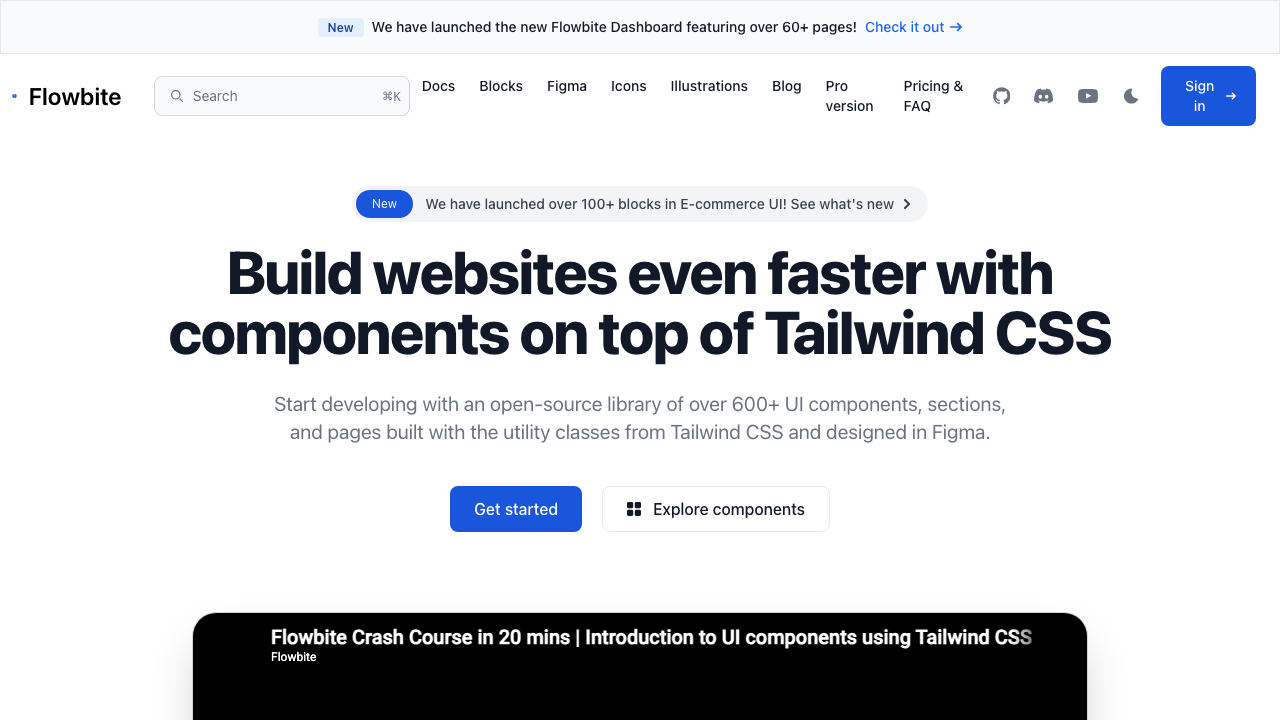
Flowbite is an open-source UI component library: over 30 million npm downloads, more than 9,100 GitHub stars, and 600+ components, sections, and pages built on Tailwind CSS and designed in Figma. The open-source library is free, and that is not charity. It is the top of the funnel and the funnel itself. Every developer who installs Flowbite to build something is a developer who already knows and trusts the brand when they need more.
The money comes from the layer on top: pro components, full website sections, and framework integrations for React, Vue, and Svelte. All of it sold as one-time purchases, no subscriptions. Two people, bootstrapped, no outside money, and that model reaches 70k a month.
Flowbite’s free open-source library has over 30 million npm downloads, and those downloads are the marketing. Instead of buying attention, Bergside gives away a genuinely useful core and lets adoption carry the brand into millions of projects. The developers who already build with the free components are the warm audience for the paid pro components and framework integrations. If your product can have a free core that people install and depend on, the open-source version is not lost revenue, it is the cheapest and most durable distribution you will ever own.
Flowbite reaches 70k a month with no recurring revenue at all: the library is free, and pro components, sections, and framework integrations are one-time purchases. A free core removes the adoption decision, and one-time pricing removes the renewal anxiety that makes buyers hesitate. Bergside proves you do not need a subscription to build a real business. Pick the smallest valuable thing to charge for, sell it once at a fair price, and let a large free top-of-funnel feed it.
What to build next is a search query
With 600+ components, the obvious question is how you decide what to build next. We do not guess. We use Semrush to see what developers are actually searching for. When we saw real volume behind “avatar tailwind” or “datepicker tailwind,” we built those components and captured the traffic the search demand was already creating.
Premium pricing, and never a discount
The most heated thing I tell people is to never discount. Cheap pricing scares away serious clients, and the moment you start discounting, customers learn to wait for the next sale instead of buying now. We hold premium prices, and it has not slowed growth. For distribution we lean on influencers over ads (a single well-placed creator video outperforms most ad spend for developer tools), story-driven posts on Reddit rather than sales pitches, and articles on Medium and dev.to with the canonical URL pointed back at our own domain.
The next bet: the layer AI still leaves missing
The project I am most excited about now is TypeUI, a CLI tool that applies a consistent design layer on top of AI-generated code. You run it with npx, and it pulls a complete “design skill” (Paper, Bento, Neobrutalism, and others) into your project so the AI-generated components come out looking like a designer touched them. It is early, open source under MIT, and pre-revenue. The bet is simple: as more code gets generated by AI, the missing piece is a consistent design system that works natively with those workflows instead of fighting them.
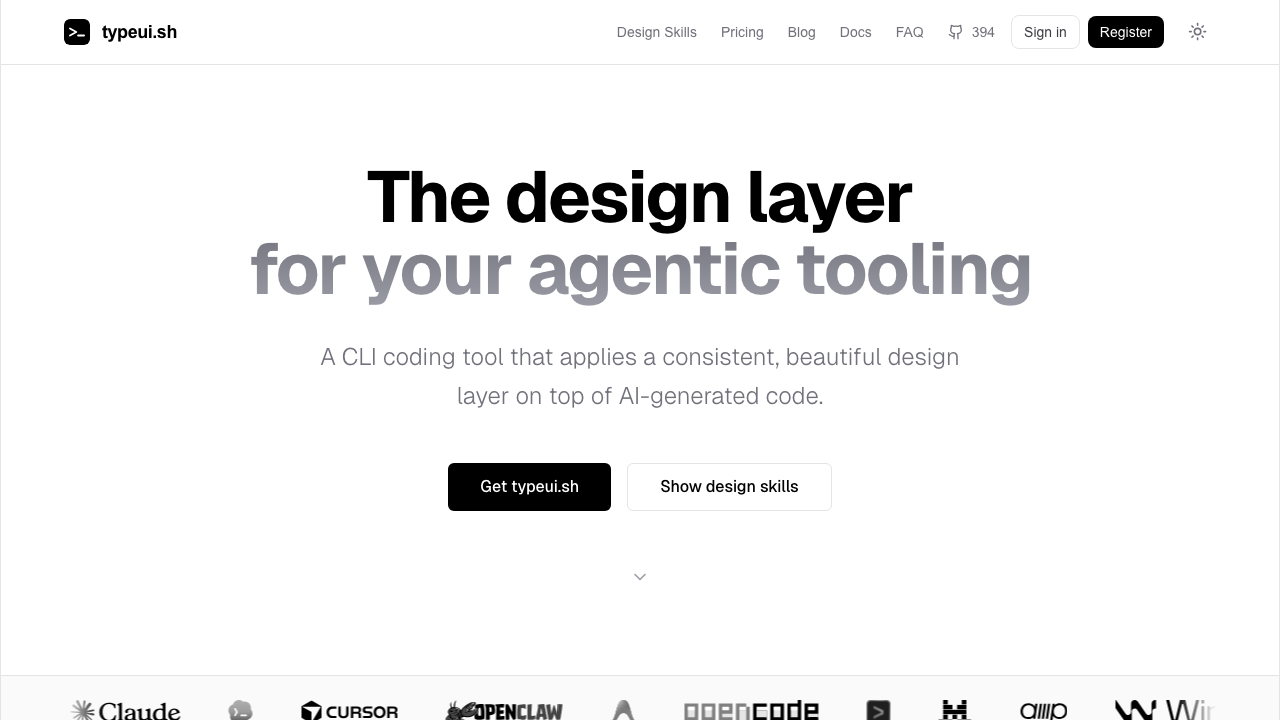
TypeUI is a bet that as AI generates more of the code, the scarce thing becomes the consistent design layer on top of it. The general pattern for founders in 2026: do not compete with the AI on the work it does well, find the adjacent layer it leaves missing and own that. AI can generate a hundred components; it cannot yet make them feel like one designed product. Look at where the new tools are strong, then build for the gap they create rather than the one they fill.
We have shipped a lot of products over the years (Flowbite, Themesberg, Glass UI, src.club), and the throughline is always the same: give people something genuinely useful for free, charge a fair one-time price for the part that saves them real work, and never compete on being the cheapest.
Advice extracted from this journey
 Mindset
A rejection is a data point, not a verdict
Bergside's first ThemeForest template was rejected, and the company that grew out of it now does 70k a month. The rejection was information about one submission, not a judgment on the whole idea. Most founders treat an early no as proof the plan is wrong and quit one iteration before the thing that works. Zoltan and his co-founder treated it as feedback, shipped the next version, and kept shipping. Separate the verdict on a single attempt from the verdict on the direction, and keep going.
 Product
Let one big spike tell you where the market is
Bergside sold one Tailwind and Figma kit for 3,000 euros in a single Black Friday night, and that one spike redirected the entire company toward Tailwind components. A sudden, sharp sales response is the market telling you where the demand actually lives, in a way no survey or roadmap meeting ever will. When something you ship spikes far beyond the rest, do not treat it as a lucky one-off. Treat it as a map. Drop what is flat and pour your effort into the thing the market just voted for with its wallet.
 Distribution
Open source can be your distribution channel
Flowbite's free open-source library has over 30 million npm downloads, and those downloads are the marketing. Instead of buying attention, Bergside gives away a genuinely useful core and lets adoption carry the brand into millions of projects. The developers who already build with the free components are the warm audience for the paid pro components and framework integrations. If your product can have a free core that people install and depend on, the open-source version is not lost revenue, it is the cheapest and most durable distribution you will ever own.
 Business & Legal
Give away the core and sell the extras once
Flowbite reaches 70k a month with no recurring revenue at all: the library is free, and pro components, sections, and framework integrations are one-time purchases. A free core removes the adoption decision, and one-time pricing removes the renewal anxiety that makes buyers hesitate. Bergside proves you do not need a subscription to build a real business. Pick the smallest valuable thing to charge for, sell it once at a fair price, and let a large free top-of-funnel feed it.
MindsetOwn the layer AI coding tools still leave missing
TypeUI is a bet that as AI generates more of the code, the scarce thing becomes the consistent design layer on top of it. The general pattern for founders in 2026: do not compete with the AI on the work it does well, find the adjacent layer it leaves missing and own that. AI can generate a hundred components; it cannot yet make them feel like one designed product. Look at where the new tools are strong, then build for the gap they create rather than the one they fill.